Open-source coding agent · your terminal
Your models.
One coding team.
Plan, build and review with the models you choose. Marshall brings local and hosted models into one workflow — with you in control of what runs.
measured
Same work. Less overhead.
We ran the same models on the same tasks and graded the result with code, not an LLM judge. Small samples, published with the task and the caveats — but the direction is promising.
fewer input tokens than Codex
Marshall and Codex both passed 2/2 Terminal-Bench tasks with the same GPT-5.6 Luna model and account. Marshall reported 119k input tokens to Codex's 319k.
fewer tool calls than pi
On a 28-file migration with 122 verifier tests, Marshall averaged 5.7 calls to pi's 14.8 on GPT-5.6 Luna. Every reported trial passed: 3/3 and 4/4.
cheaper cached OpenRouter turns
In a three-turn live API check, prompt caching cut follow-up turns from $0.00955 to $0.00096 and $0.00098. Same 3,746-token prefix, now reused.
These are task-specific results, not a claim that Marshall always wins. See configurations, methodology and limitations.
the team
One job. Several models.
A planner, a coder and a reviewer come for free. Then you add whoever the work needs — a tester that can only read and run, a summariser on a cheap local model, a reviewer on something stubborn. Each one has a name, a model, and a one-line brief.
planner
Turns the ask into an ordered plan. Pin it to whatever thinks best.
coder
Reads, edits, runs tests. Delegates to named agents when the work splits.
reviewer
Looks at the actual diff. Does not rubber-stamp.
Mix however you want. DeepSeek V4 Flash on planning, Qwen3.6 27B writing
the code, Kimi K3 reviewing. All local, all hosted, or split across
both. /team add walks you through it.
open weights
Built for models you actually run
Most agents treat local inference as a fallback. Marshall starts there. llama.cpp and Ollama are first-class — no key, no account, no cloud.
It sees what's loaded
Which models are resident, real context length, quant, file size. Loaded ones sort first so you don't eat a cold reload mid-task. On OpenRouter, cost per million tokens is right there.
Fast and deep, any vendor
Planning and review on a frontier model. File reads and history compression on a local one. Or both local, on two machines. The bill follows the split.
Match the belt to the model
light for a small model that shouldn't spawn helpers. default for everyday work. agentic when you want named agents running in the background.
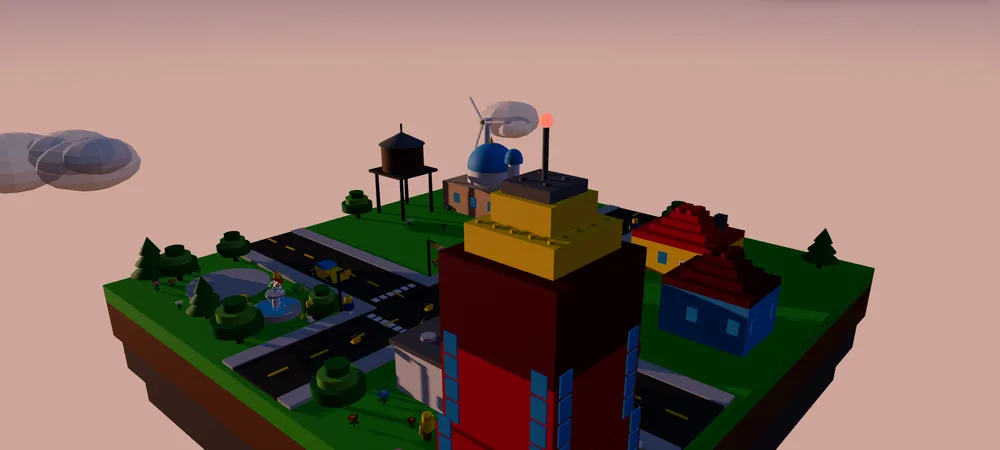
Built entirely on a local 27B
A LEGO-style floating city with a zombie-siege mode, every line written by Qwen 3.8 27B through Marshall — no cloud model involved. Play it.
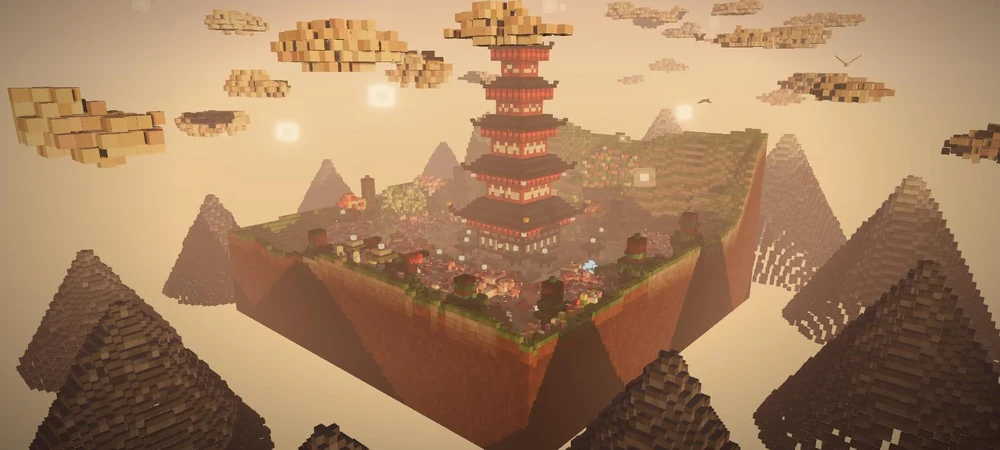
Same model, a different mood
A five-tier pagoda on a floating island, 81,000 voxel cubes, day-to-night lighting and a working camera rig — also Qwen 3.8 27B through Marshall, no cloud model involved. Explore it.
safety
Three levels. You pick.
Default is you. Every write and every shell command shows a diff before it runs. Turn the dial when you want something else.
you approve
Human in the loop. Approve once, always-allow for the session, or deny.
hands off
No prompts. For a sandbox or CI — not for a repo you care about.
a judge
A fast model reviews each tool call. Safe skips you. Unsafe still asks, with the reason attached.
also
The rest, without the lecture
Interrupt and steer
esc stops at the next safe boundary. Your next message course-corrects — no restart, no half-written files.
Project memory
AGENTS.md is loaded at session start. Conventions, architecture, decisions — so a smaller model already knows the house rules.
Background work
Long jobs keep running. History compresses when it has to. The terminal is one client of a headless engine.
Open, all the way down
MIT licensed. Built on agention. No hosted service in the middle.
Leaves nothing behind
--private — no session log, no scratch notes, nothing written to config.json. OpenRouter requests are routed to deny data collection; local models need no such flag.
providers
Your weights, your hardware, your call
Setup leads with llama.cpp, Ollama and OpenRouter. Pair any two. Switch with /model.
--host
openrouter · live catalogue · free tiers ranked first
claude · ANTHROPIC_API_KEY or login
openai · OPENAI_API_KEY
gemini · GEMINI_API_KEY
mistral · MISTRAL_API_KEY
No GPU? OpenRouter lists models that can actually call tools, with
:free variants first. Cost per million tokens sits next to the name.
commands
Small surface, muscle memory
The ones you'll actually type. /help prints the rest.
light · default · agentic — match the tool belt to the modeldefault · yolo · agentic — you, nobody, or a judgefine print
What it doesn't do
Worth knowing before you point it at something that matters.
get started
Your models are already running
If llama.cpp or Ollama is up, marshall finds it. No account. Or install from npm.